Becoming the Wicked Witch
What Oz has to teach us about rejecting the well trod path

Trigger warning: this month’s newsletter contains mentions of musical theater, movie spoilers, and the political circus. Proceed with caution. 🤹 🎶 🎭

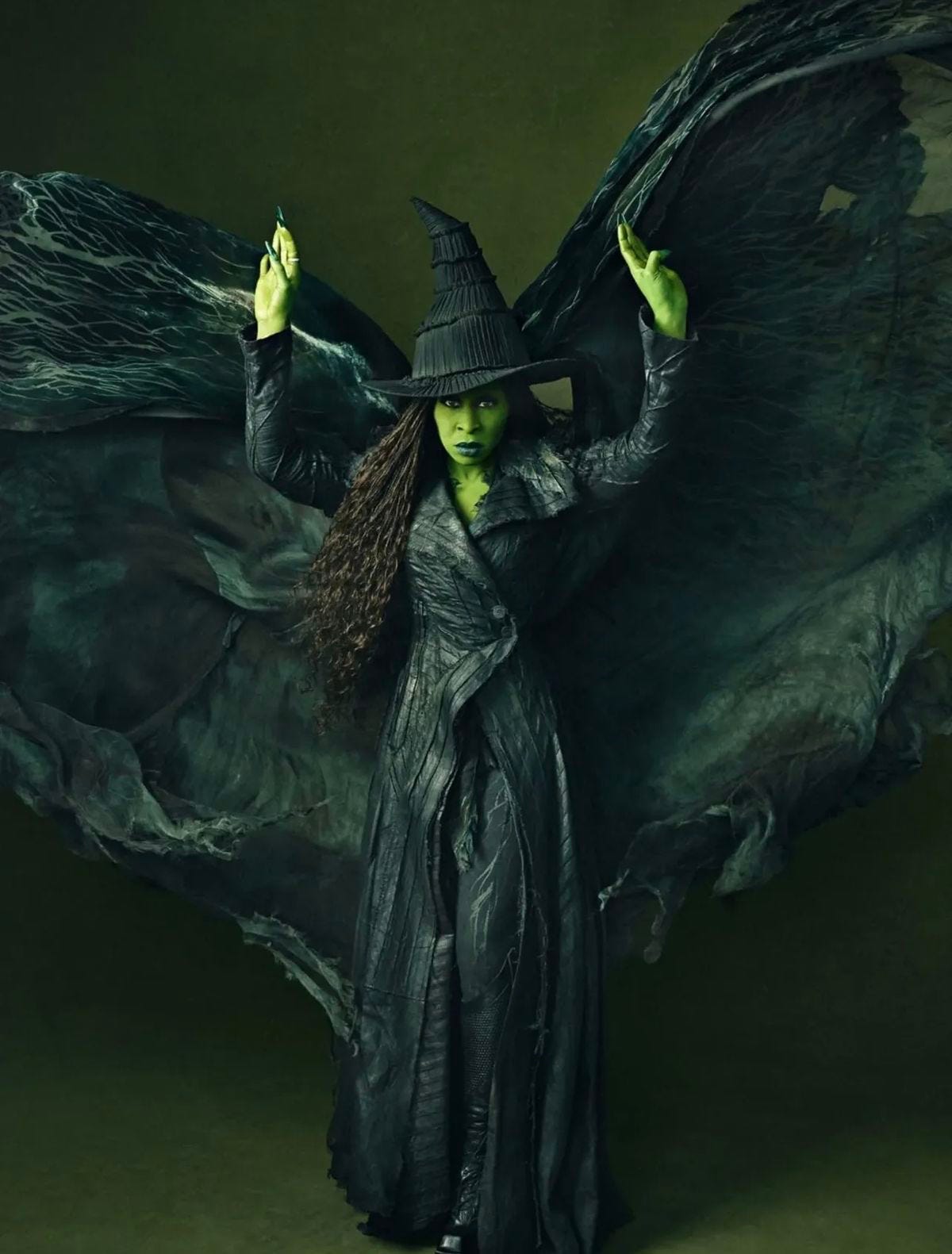
The Wicked Witch of the West flew into my life on All Hallows Eve.
Just hours after yet another “I can’t do this anymore” moment about my career, I sat across from my therapist as she asked:
“Who is the counterpart your sunny, presssure-to-be-positive Pollyanna? Who is your underworld witch and what should we call her?”
Though I know little about the triple threat book/play/movie Wicked, the story’s witchy scapegoat villain, Elphaba, was the first thing out of my mouth.
The following day a friend suggested we watch the movie. Settled on the couch with our Yogi tea, they asked, “What’s your fortune?”
The label of my tea bag read, “You are unlimited.“
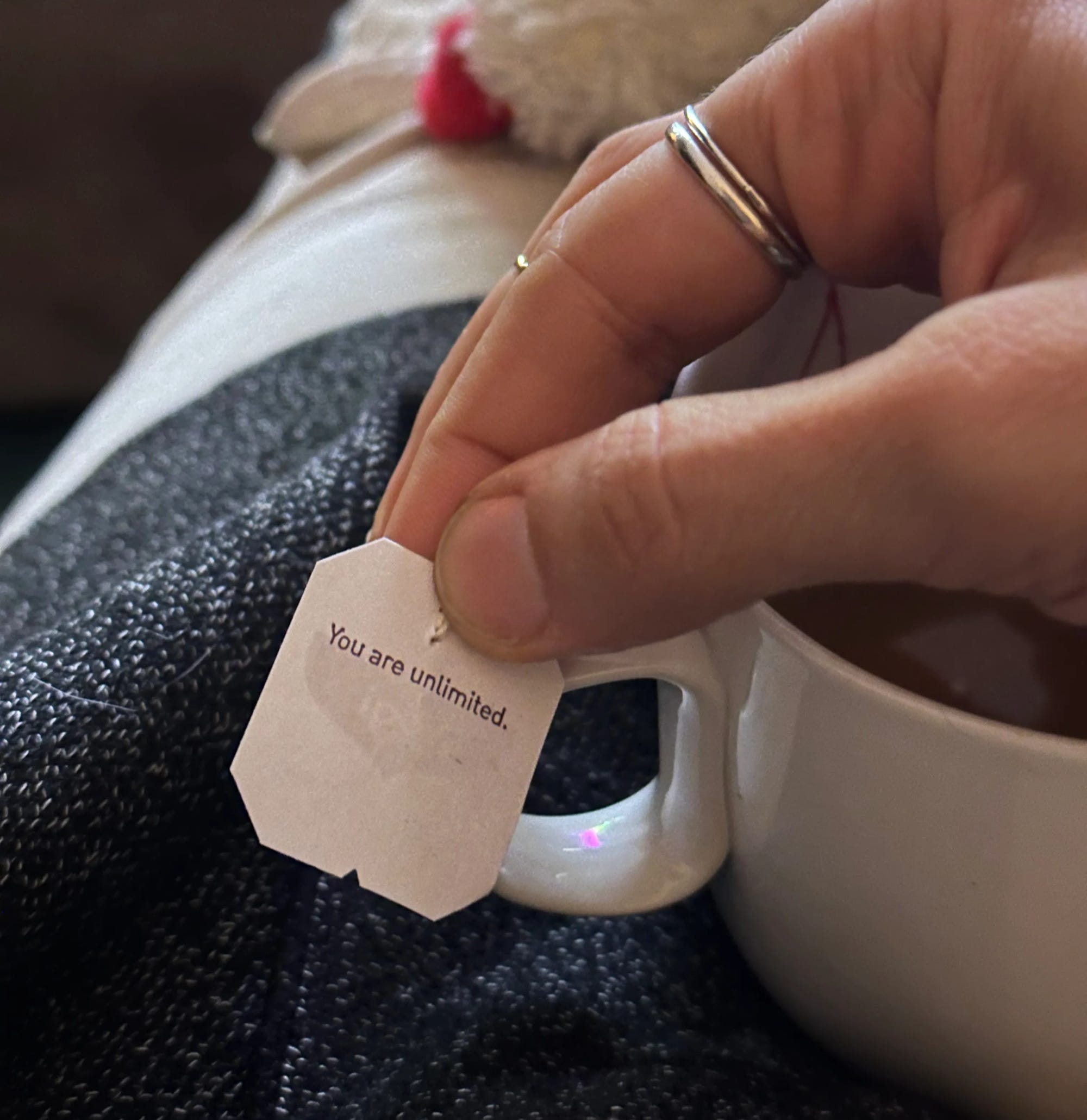
My friend gasped, understanding the mystical weight of the message. When I asked what it meant they said, “Oh, you’ll see” (…and you will too in section three of the newsletter!).
Wicked is a retelling of the Wizard of Oz from the perspective of the Wicked Witch of the West, the story of how the Good and Wicked Witches came to be.
Like every good enemies-to-friends narrative arc, the witches Glinda and Elphaba battle and then befriend one another. Yet when the two are faced with a morally dubious demand from the Wizard, they’re ripped apart by the expectant eye of Oz.
Glinda, so used to the capitalistic exchange of obedience for love, chooses to follow the Wizard’s instruction, the well trod path, the Yellow Brick Road.
But when Elphaba is asked to bend her newly discovered power to the nefarious whims of the Oz empire, she refuses to conform, to trade herself and her morals for societal acceptance.
Naturally, a fight between the witches ensues.
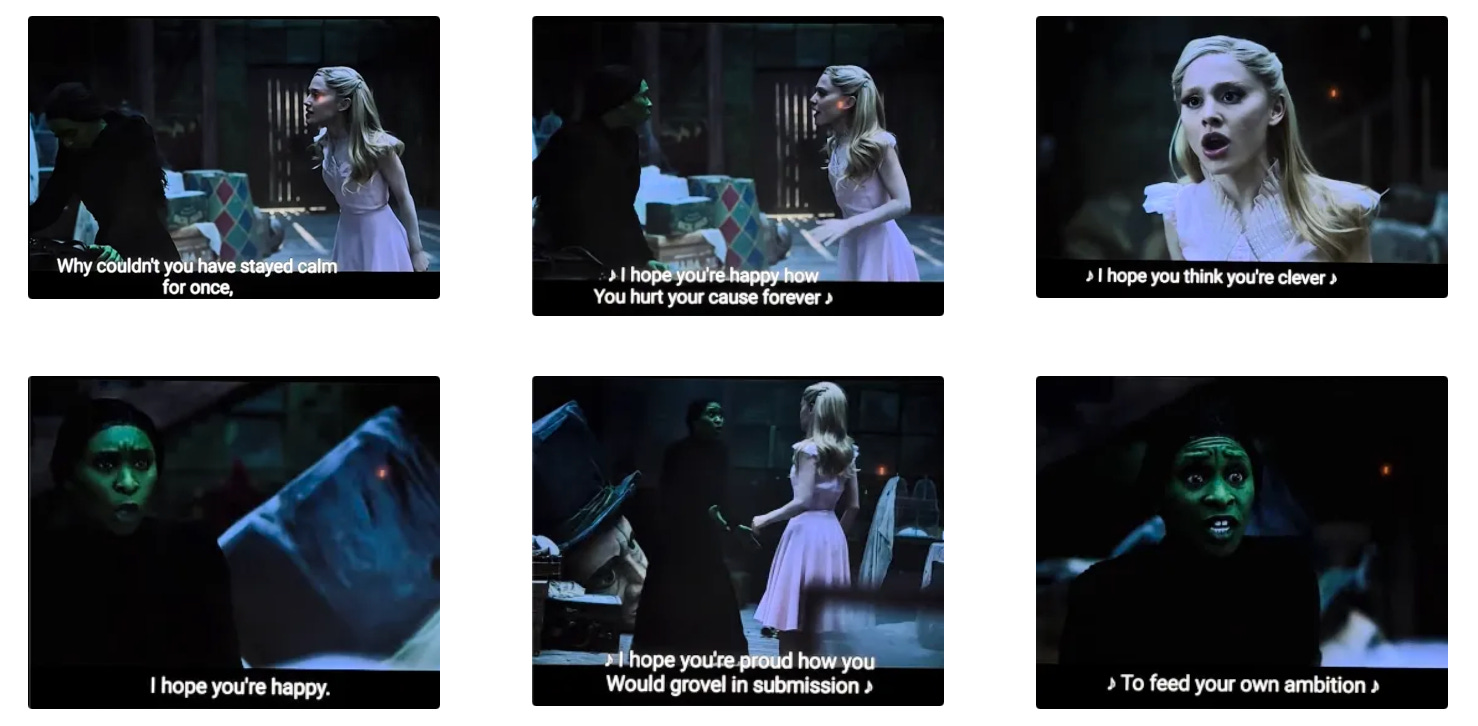
Just like a psyche split and longing for reintegration, the Good and Wicked Witches try to reason with one another.
Glinda sings:
You can still be with the wizard
What you’ve worked and waited for
You can have all you ever wanted…
Elphaba sings back:
I know. But I don’t want it
No, I can’t want it, anymore
Something has changed with in me
Something is not the same
I’m through with playing by the rules of someone else’s game.
Too late for second-guessing
Too late to go back to sleep
It’s time to trust my instincts
Close my eyes and leap.
It’s time to try defying gravity.
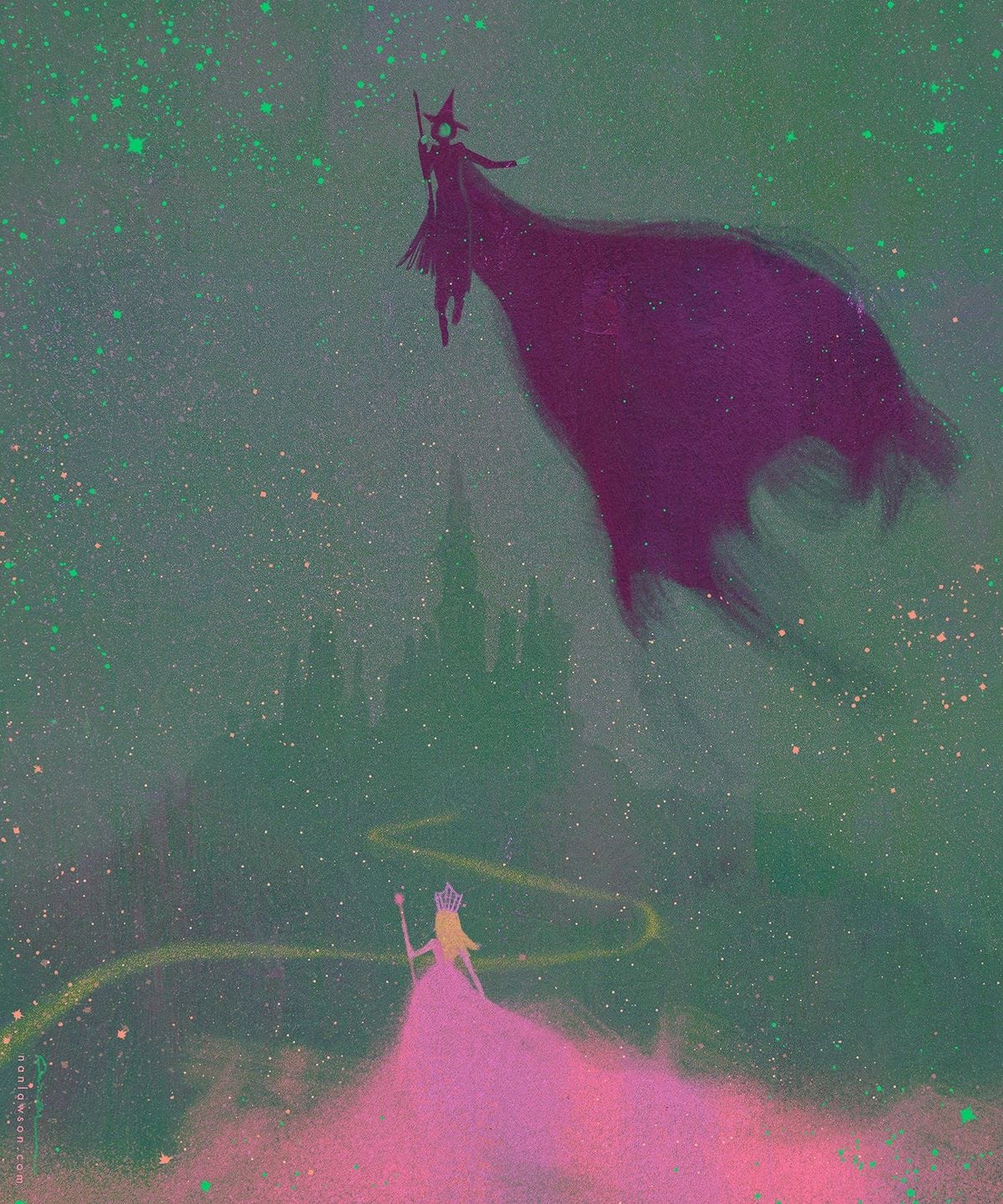
As a clash of pink and green, light and dark, “good” and “wicked” unfolded on screen, I recognized myself not just in the anti-hero Elphaba, with her fiery passion and fierce opposition to injustice, but in her counterpart, Glinda, the good witch, an over-achieving, but popular people pleaser.
All of us contain both a Glinda and an Elphaba. A side of ourselves that just wants to be “good” so we can be loved. Another side that knows conscribing to “good” will banish our most alive parts.
An “I can’t do this any more” moment is where we push back against the gravity of the given, where we lovingly let go of who we thought we had to be and step into the power of who we really are.
The job that no longer resonates.
The relationship stuck in stasis.
The hobby turned hustle.
The calling left to collect dust.
The body begging for loving attention.
The persona built for other people.
What is your “I can’t do this anymore” moment?
Where in your life are you ready to defy gravity?
Defying Gravity
This month, New York City’s 111th* mayoral election was an IRL defying gravity moment (believe me when I say I don’t love giving airtime to the political circus, but this feat was more magic than Ringling Brothers).
Zohran Mamdani went from a little known member of the New York State assembly to the Democratic Socialist mayor of one of the most capitalistic cities in the world.
How did this happen?

Born in Uganda to parents of Indian-Muslim decent, after a two year pitstop in Cape Town where he “saw inequality up close”, Mamandi’s family settled in Morningside Heights, New York. African, South Asian, and American, Mamdani’s mixed background stands in stark contrast to the United States’ version of the Yellow Brick Road: White, Christian, Nationalistic.
Just like Elphaba, both his difference and his privilege (he too came from a wealthy family) is what made him see injustice more clearly, what drove him to set off in search of a socioeconomically creative path to help the people of Oz…er, New York City.
Instead of the typical top down approach, Mamdani engaged the roots of New York’s diverse communities, speaking with a wide swath of real New Yorkers about what concerned them most.
But, plot twist, just like Glinda, his campaign videos, delivered playfully in languages such as Arabic, Urdu/Hindi, and Spanish reflected this multicultural method. Most importantly he brought humor (and with it hope) back into the political arena by connecting his campaign messages with time honored New York traditions.
Though many believed a win wasn’t possible, Mamdani trusted not only in his own power to make change, but in the power of the collective to topple the political status quo. Mamdani dared to defy gravity. He dared, and then he did.
When we are trying to defy the gravitational pull of what feels inevitable, it is easy to fly toward an all or nothing mindset.
Burn it down to the bolts! Rip it up at the seams! Pull it out at the root!
But any gardener knows the toughest roots take determination, a bit of humor, and a vision for the beauty that will grow in the root’s place. This mentality is the integration of our inner Glindas and Elphabas—the pink of the flower upheld by the green of its stem.
Where has your difference, your inner Elphaba, given you the perspective to forge change?
Where has your charm, your inner Glinda, given you the power to connect and inspire hope?
*(I’m looking at you numerology stans. The 111th mayoral election, as in 111 for an upcoming 1 year…? BBE—big beginning energy—is afoot! 😉)
Leaving the Yellow Brick Road
In both The Wizard of Oz and Wicked, the Yellow Brick Road represents the world we know—the path of promised prosperity, the route of least resistance, the place where painful truths are exchanged for convenient fantasies.
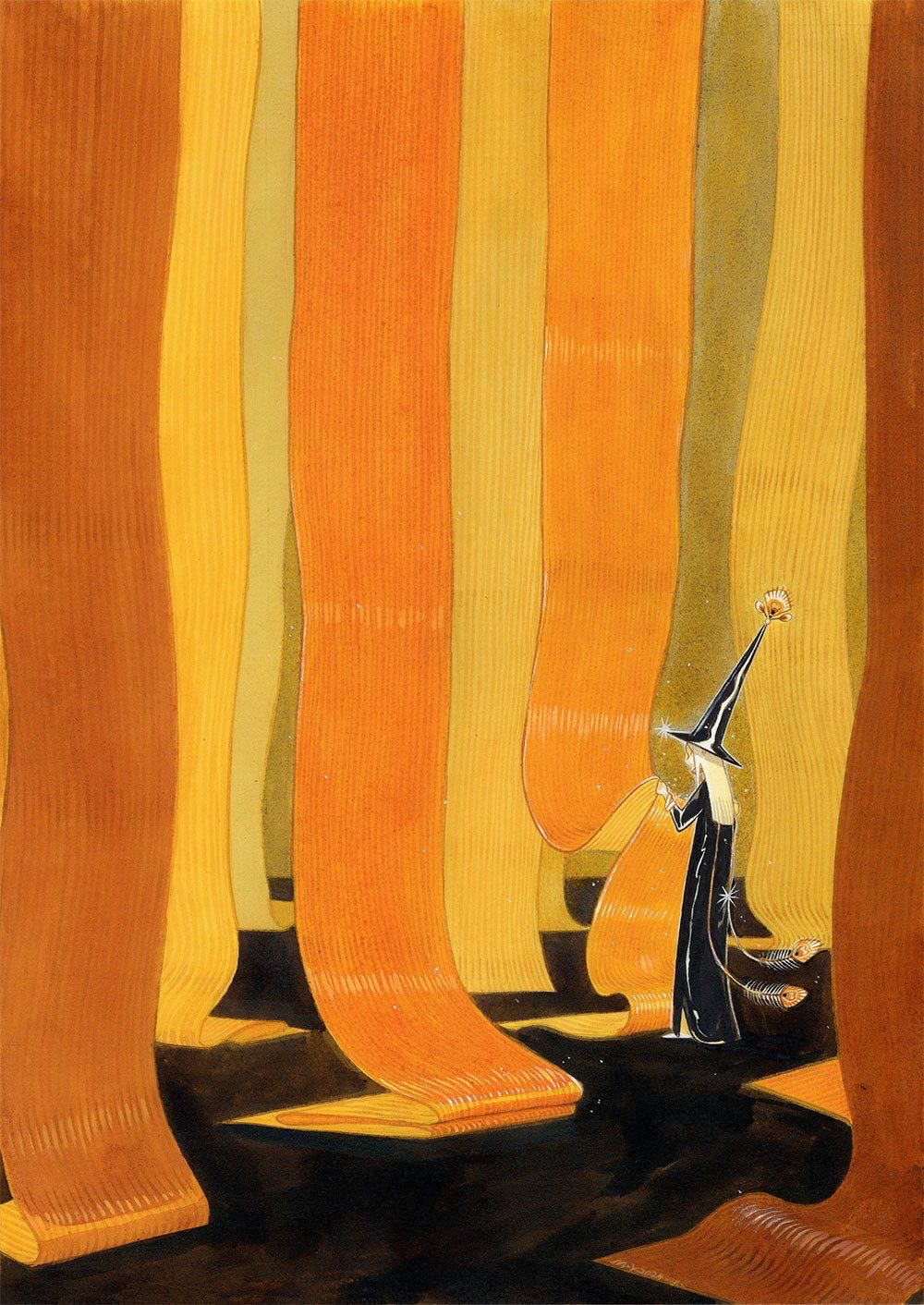
For so many both in Oz and society, there is comfort and safety in the Yellow Brick Road, in its brightness, clean edges, and clarity. But following the pre-forged trail without question can make life feel, well, limited.
“Unlimited, unlimited, unlimited,” Elphaba sings in *Wicked’s “*Defying Gravity” (queue the tea bag fortune!) She knows that her power, her magic, is not something that can be bottled by the known world—a world that didn’t accept her, a world that shunned her difference until they found a way to extract it for themselves.
Elphaba’s choice to forge her own path is what earns her the wicked title. Coming from Middle English, *wikked* means “evil in principle or practice, morally perverse.” To those in power, that’s exactly what Elphaba’s morals were—a perversion of the staid route that built a yellow road off the backs of enslaved animals.
Elphaba’s raw honesty about the missteps of Oz is the mirror she holds up to the underbelly of society. It is her sensitivity to suffering, not her supposed wickedness, that makes her a threat.
With Elphaba’s magic out of the caldron, the spell of the Yellow Brick Road is broken. She knows her power will carry her into the unknown world where all parts of her will be able to fly free.
Leaving the Yellow Brick Road Tarot Spread
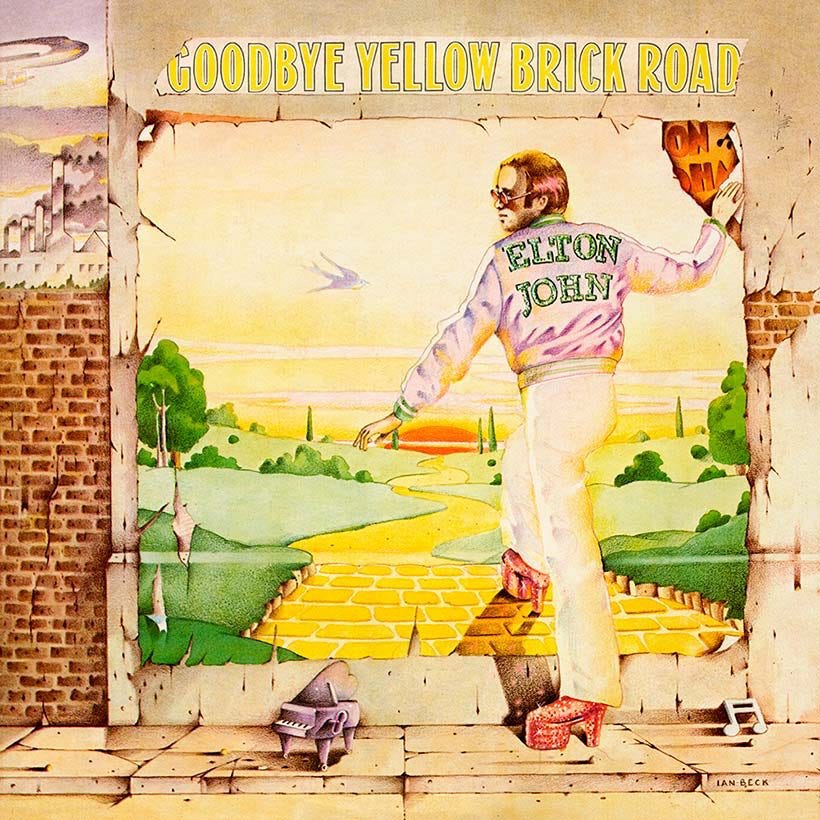
This Hermit Year has been rife with metaphors of pathless paths and journeys down unlit roads. We’ve learned that all of us, at some point or another, must leave route we know in order to understand if it’s truly meant for us.
What is your Yellow Brick Road?
Where is the unpaved path calling you?
What feelings might arise as you leave the familiar route?
What tools, guides, or mantras do you need as you step into the unknown?
What power will you reclaim as you choose your own direction?
Flying Solo, Flying Free
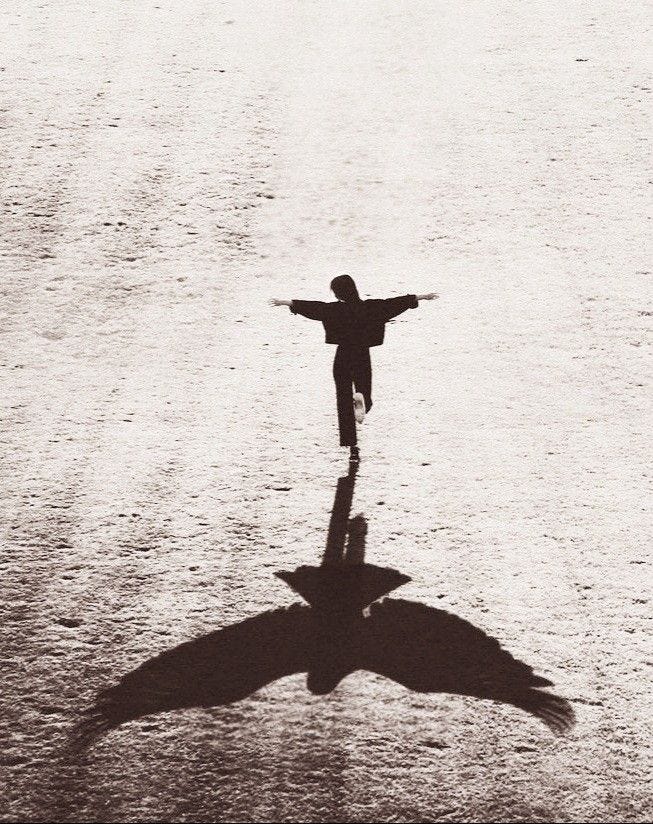
Musical reminders that when we fly free we’re never flying solo, because we’re in the company of our most honest and alive selves.
“Defying Gravity” as sung by Cynthia Erivo and Arianna Grande.
“Goodbye Yellow Brick Road” This is a fabulous 1973 clip of Elton John doing his thing.
“Jericho” by Iniko shows us that after we leave the Yellow Brick Road, we’re ready to topple empire.
XO
ALTARU TAROT
P.S.
I visited Salem, Massachusetts for the first time last weekend.
Did I watch Hocus Pocus? Yes I did.
Did I get my aura read? You bet.
Did I take a quiz at a broom shop and get “Defying Gravity” as my broom type? If the Witch Hat fits 🌝 🧙